Bahrain features an arid climate. Bahrain has two seasons: an extremely hot summer and a relatively mild winter.
During the summer months, from April to October, afternoon temperatures average 40 °C (104 °F) and can reach 48 °C (118.4 °F) during June and July. The combination of intense heat and high humidity makes this season uncomfortable. In addition, a hot, dry southwest wind, known locally as the qaws, periodically blows sand clouds across the barren southern end of Bahrain toward Manama in the summer.
The Constitution of Bahrain states that Islam is the official religion and that Shari'a (Islamic law) is a principal source for legislation. Article 22 of the Constitution provides for freedom of conscience, the inviolability of worship, and the freedom to perform religious rites and hold religious parades and meetings, in accordance with the customs observed in the country; however, the Government placed some limitations on the exercise of this right.
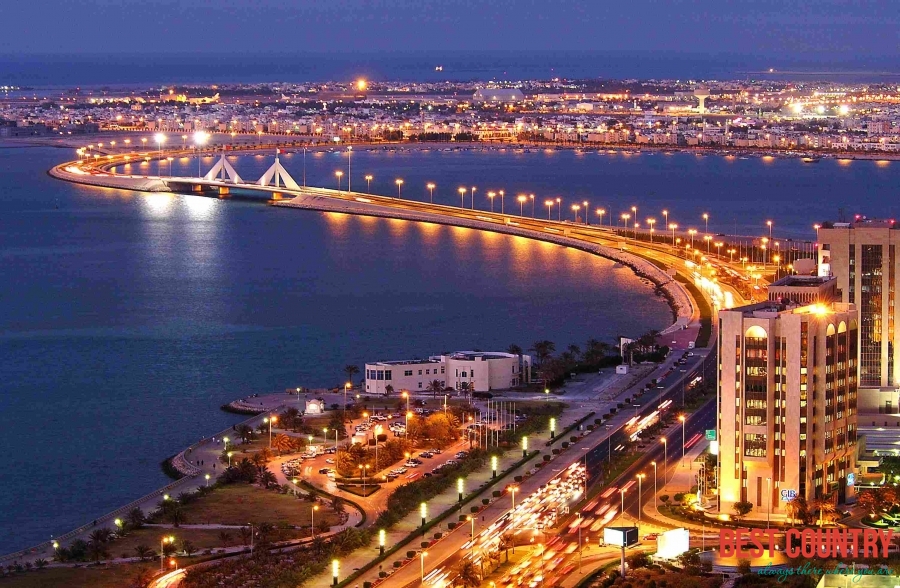
Bahrain is an archipelago (chain of islands) in the Persian Gulf. The six major islands are Bahrain (also known as as-Awal), Muharraq, Sitrah, Umm al-Nassan, Jidda (used as the Bahraini prison), and Nabi Salih. The twenty-seven minor islands include the Muhammadiyah and Hawar groups. The capital city, Manama, is located on the north coast of Bahrain island.