Namibia
Weather and climate of Namibia
Namibia has more than 300 days of sunshine per year. It is situated at the southern edge of the tropics; the Tropic of Capricorn cuts the country about in half. The winter (June–August) is generally dry, both rainy seasons occur in summer, the small rainy season between September and November, the big one between February and April.
Religion in Namibia
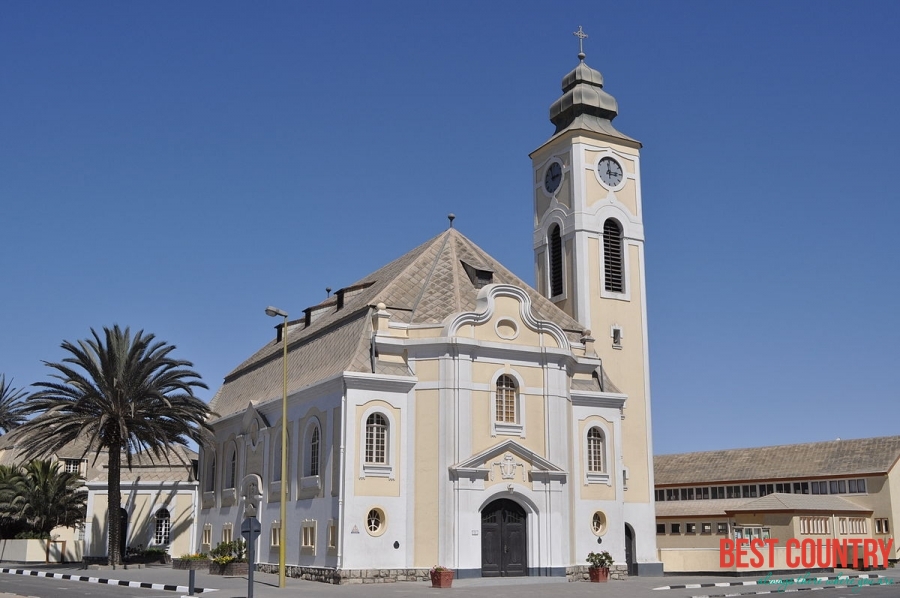
More than 90 percent of Namibian citizens identify themselves as Christian.

Health in Namibia
Namibia faces a number of challenges providing health care to its citizens. The country has a dual system of public (serving 85% of the population) and private (15%) health care providers. In the financial year 2006/07, Government and private health expenditure combined accounted for 8.3% of the country's Gross Domestic Product.